

Suez Canal – Man-Made and Marvellous
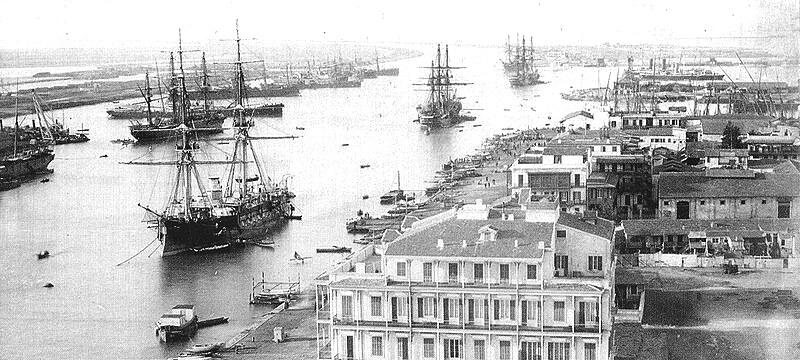
The Suez Canal, a man-made marvel connecting the Mediterranean Sea to the Red Sea, has been a vital waterway for global trade and geopolitics for over a century. Its rich history, strategic importance, and recent events have thrust it into the spotlight, revealing how important trade routes are even in this modernized world.
Constructed in the mid-1800s, the Suez Canal is a testament to human engineering prowess. Ferdinand de Lesseps, a French diplomat, spearheaded the ambitious project that aimed to create a shortcut for maritime trade between Europe and Asia, reducing the need for a lengthy journey around the southern tip of Africa.
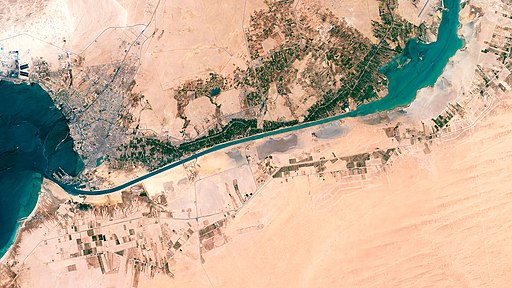
The construction was a monumental effort, involving the use of corvée (forced labour), where many of the laborers were employed against their will to dig out the canal. An estimated 1.5 million people from around the world were employed during the construction, with many tens of thousands dying during this period from epidemics which ravaged worksites. A later estimate of the deaths would come to 120,000, as the original data was extremely limited and likely inaccurate.
The canal officially opened in 1869, facilitating a quicker and more efficient passage for ships. Before this, goods were often offloaded onto the mainland and carried between the Mediterranean and Red Sea.
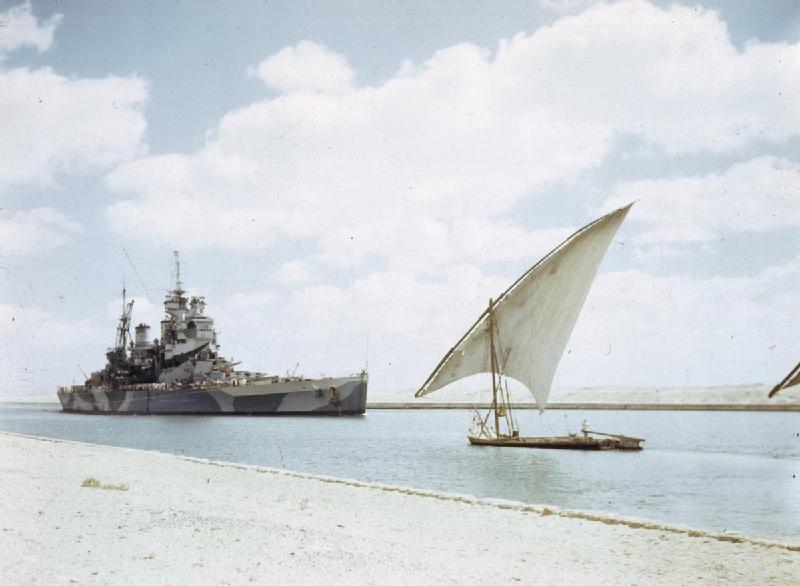
The Suez Canal has been at the center of geopolitical tensions and conflicts throughout its existence. Control over this vital waterway has been a source of constant contention. The nationalization of the canal by Egyptian President Gamal Abdel Nasser in 1956 led to the Suez Crisis, highlighting the canal’s importance as a geopolitical chessboard. Britain, France and Israel responded to this nationalization by attacking Egypt, destroying the majority of Port Said, the coastal city at the mouth of the Suez Canal. The U.S.A. would disapprove of this action, eventually leading to the canal being returned to the nation of Egypt, but it wouldn’t be long until another conflict arose. In 1967, the Third Arab-Israeli would result in the Suez being blocked again by scuttled ships, only being reopened much later in 1975.
The Suez Canal has been generating as much as $2 billion USD each year since the 1990s, and recently set a record revenue of $9.4 billion USD in the fiscal year ending in June 2023.
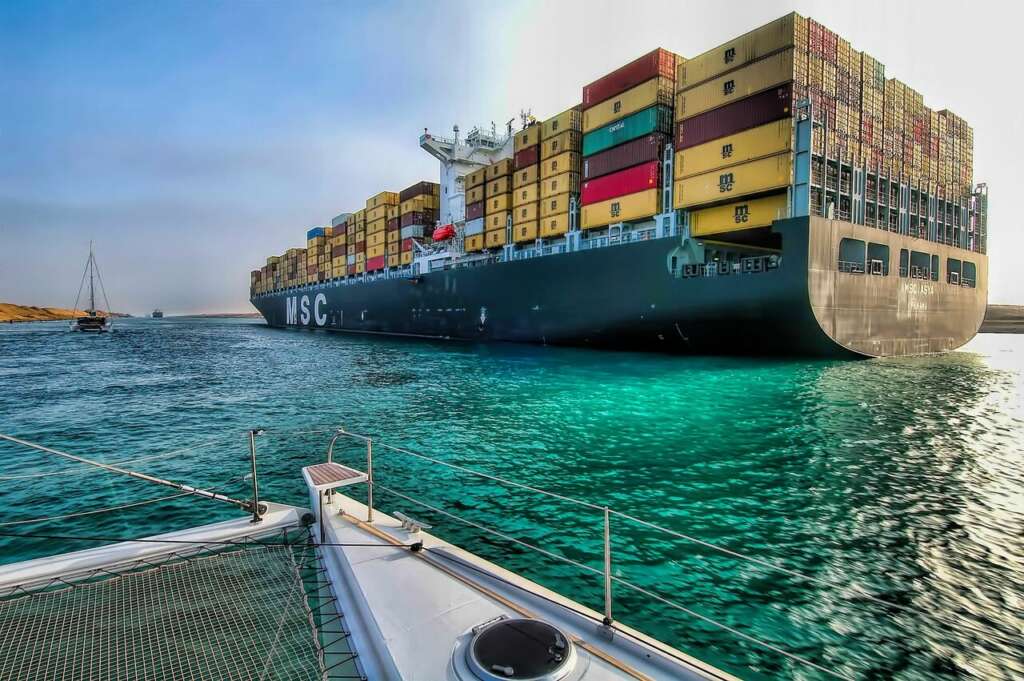
In recent years, the Suez Canal faced many public challenges, the most notable being the blockage caused by the Ever Given, a massive container ship, in March 2021. The incident captivated the world and exposed the vulnerability of global trade routes. The canal’s closure disrupted billions of dollars worth of goods, prompting a reevaluation of the canal’s effectiveness when accidents like these occur.
The Suez Canal stands as a symbol of simple, but effective human ingenuity, connecting continents and shaping the course of history.