

Shine a Light on the Northern Lights
The Aurora Borealis and its lesser known brother, the Aurora Australis are an electrical phenomenon that illuminates the sky in a spectacular range of deep greens, reds and purples. In today’s blog we will focus on the northern cousin, Aurora Borealis and Shine a Light on The Northern Lights.
Auroras are caused by a collision of charged particles, emitted by the sun, and gaseous molecules which make up our atmosphere. The charged particles (electrons) interact with the molecules exciting them. This fills the molecules electron shells with an unstable number of electrons. Gradually the molecules release these electrons to return to their natural state, as this occurs it gives off photons – light. Neon lights work on the same principle, the neon gas is excited by electricity, giving off photons.
The type of gas the charged particles interact with will change the colour of the aurora. Oxygen will emit green light, nitrogen will release purple/blue light, a mix of the two at higher altitudes will release red light.
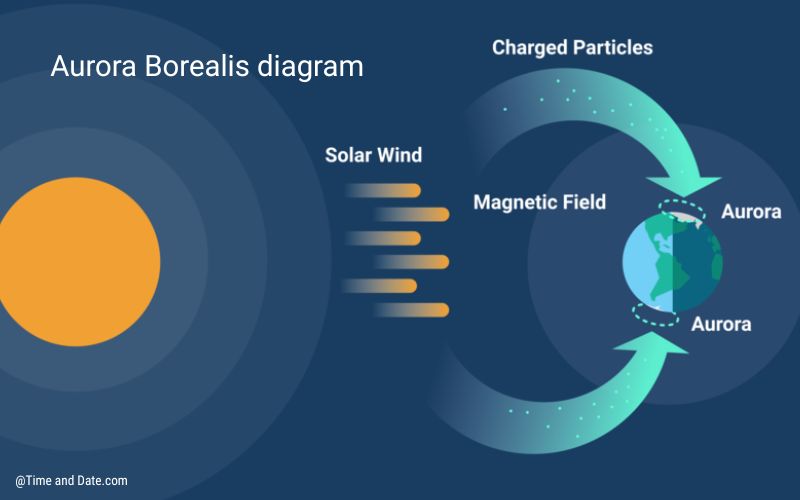
Why do they only occur by the magnetic poles of the Earth? The solar winds that carry the charged particles interact with the magnetosphere of the Earth. The solar wind disrupts the field, creating an opening, where the charged particles are then drawn along the magnetic field lines of the Earth. The magnetic field lines lead to the magnetic poles on the north and south of the Earth. Any charged particles that don’t make it through the magnetic field of the Earth get deflected out into empty space. This results in the phenomenon only appearing in the north and south. It also means if there is an aurora in the north, there will be an aurora in the south at the same time.
Where and when can you see an aurora?
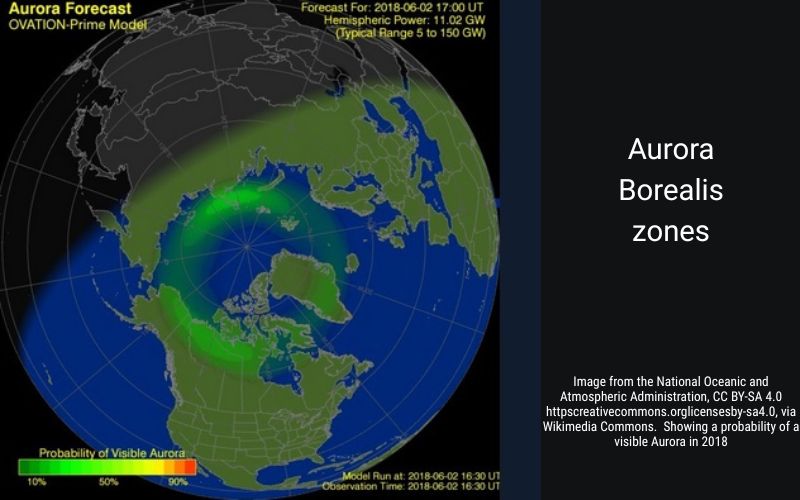
If you are after an aurora, areas with dark and clear skies are ideal. The longer the night, the higher the chances are you will be able to see one. This usually means long winter nights are best. The closer you are to a magnetic pole, the higher the visibility of an active aurora.
Aurora’s occur based on an eleven-year solar cycle. The solar cycle determines the frequency of solar activity in relation to the Earth. In 2019 and 2020 it was the lowest frequency of solar events, making the possibility of seeing an Aurora very low. Each year after 2020 increases the higher frequency of solar events, eventually peaking at 2024, afterwards it began to reduce again.
Aurora Borealis
This means cities close to the poles with low light pollution are perfect. Norway and Iceland offer beautiful cities and areas where you can camp out to view the Aurora Borealis. Remote Northern Canada, Alaska and Greenland also offer opportunities in the Arctic.
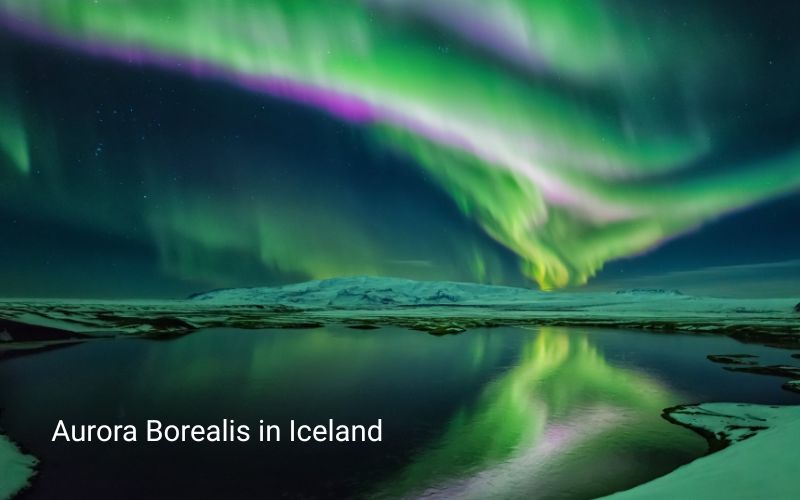
In Norway, Tromsø provides many tour options and is slightly warmer than other regions. Lyngenfjord is another Norwegian city but has extremely low light pollution, if you see a photo from Norway of the Aurora Borealis, chances are it came from here.
Iceland’s Capital Reykjavik is a bigger city with plenty of quiet spots to view the lights. Öskjuhlíð, Reynisvatn, Grótta Lighthouse and Borgarholt to name a few.
Canada, Alaska and Greenland are also all fantastic options to see the Northern Lights. If you are more interested in these areas, Yellowknife, Fairbanks are good options for Canada and Alaska respectively. All of Greenland matches the criteria for aurora viewing, but we recommend Kangerlussuaq, Sisimiut or Ilulissat.
If you want the best chances of seeing the Aurora Borealis, the months close-to and during winter are best, however, you may catch them with enough darkness in the sky during the spring or autumn. This makes October to March ideal, but only because the nights are much longer. Summer in far north areas such as Greenland will be nearly continuous daylight, leaving very little opportunity to see the lights.
Photographing an Aurora
If you are using your phone camera or another camera on auto it will be difficult to get a clear image of an aurora. You need to change some settings around to get the clearest image.
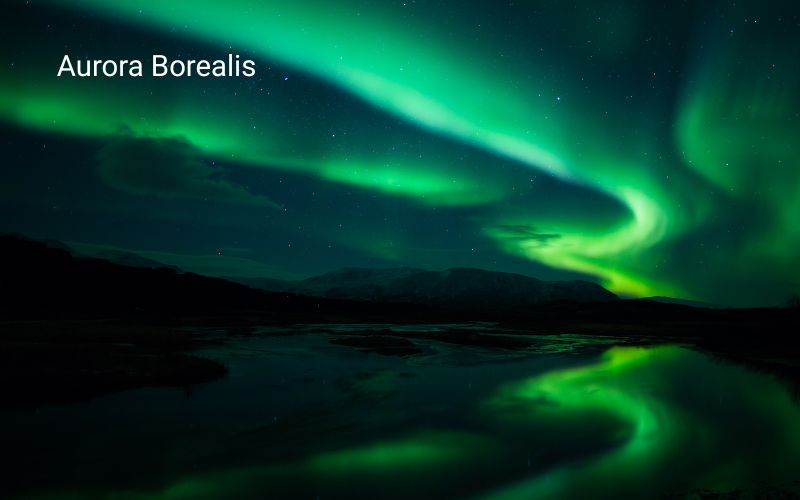
Try these settings for a better Aurora Borealis image
- Set your camera settings to manual
- Turn off Image Stabilization
- Turn flash off
- Set your ISO to 1600
- Set camera aperture to the lowest possible setting.
- Depending on the vividness of the lights, change your shutter speed. Set it between 15-30 seconds for weak lights, and between 1-6 for stronger lights.
- Use a tripod or some form of stabilisation, if the camera moves the image will be blurry
- Manually focus on the moon or stars, then zoom out
- Use a remote or timed shutter setting, this will further reduce movement of the camera
If the image of an aurora is too bright try reduce your ISO or shutter speed, if it isn’t bright enough increase your ISO or shutter speed.
Alternatively, there are many applications available for mobile devices that will adjust your camera to the optimal settings. These are the best options for capturing an aurora on a phone.