


Make a new booking on select Adventure Canada 2028 expedition voyages and for a limited time you can save 25% off the cruise fare. Offer applies to new bookings only made by 8th December, 2026. Discount applies to the cruise fare only, and not on mandatory flight costs or optional extras. Prices shown are already at the reduced fares. Offer is subject to availability at time of enquiry. Conditions apply*
Twin Category 2 Albatros Cabin – was USD25,345 – now USD19,722*pp
Twin Category 3 French Balcony Cabin – was USD26,845 – now USD20,846*pp
Twin Category 4 Balcony Cabin – was USD28,145 – now USD21,822*pp
Twin Category 5 Superior Balcony Cabin – was USD29,045 – now USD22,496*pp
Twin Category 6 Grand Balcony Cabin – was USD30,545 – now USD23,622*pp
Twin Category 7 Balcony Suite – was USD32,045 – now USD24,747*pp
Twin Category 8 Junior Suite – was USD33,945 – now USD26,172*pp
Twin Category 9 Premium Suite – was USD37,945 – now USD29,172*pp
Solo Category A Cabin – was USD38,045 – now USD29,247*pp
____________________
Into the Northwest Passage cruise includes:
– Required charter flight from Toronto to Kangerlussuaq (cost USD1,700 per person)
– One way coach transfer from airport to port
– 16 night expedition cruise aboard Ocean Victory from Kangerlussuaq to Kugluktuk (Coppermine)
– All shipboard meals, including 24-hour coffee, tea and snacks
– Complimentary wine, beer, and soft drinks are served with dinner
– The expertise and company of the English speaking Adventure Canada expedition staff
– Complimentary expedition wind and water resistant jacket (yours to keep)
– Complimentary use of gumboots (loan onboard)
– Onboard educational presentations & interactive workshops
– All zodiac excursions, guided activities, sightseeing and community visits
– Special access permits, entry & park fees
– Evening entertainment
– Internet access (basic service)
– Port taxes and fees
– One way coach transfer from port to airport
– Required charter flight from Kugluktuk to Yellowknife (cost USD1,150 per person)
Excluded:
– Program enhancements/optional excursions
– Gratuities
– Personal expenses
– Mandatory medical evacuation insurance
– Additional expenses in the event of delays or itinerary changes
– Possible fuel surcharges and administrative fees
– Pre and post trip hotel accommodation
– Kayak program
– Premium internet access available at an additional cost
Special Conditions
Special Validity Dates
Cruise Itinerary
| Date | Activity | Arrive | Depart |
|---|---|---|---|
| 17 Aug 2028 | Toronto, Ontario, Canada |
Fly to Kangerlussuaq | |
| 17 Aug 2028 | Kangerlussuaq, Greenland |
Embark | |
| 18 Aug 2028 | Sisimiut, Greenland |
Coast | |
| 19 Aug 2028 | Sisimiut, Greenland |
Coast | |
| 20 Aug 2028 | Ilulissat, Greenland |
||
| 21 Aug 2028 | Greenland |
Northwest Greenland | |
| 22 Aug 2028 | Greenland |
Northwest Greenland | |
| 23 Aug 2028 | At sea | ||
| 24 Aug 2028 | Smith Sound |
||
| 25 Aug 2028 | Aujuittuq (Grise Fiord) |
||
| 26 Aug 2028 | Lancaster Sound, Canada |
Tallurutiup Imanga | |
| 27 Aug 2028 | Devon Island, Canada |
||
| 28 Aug 2028 | Beechey Island, Arctic Canada |
||
| 29 Aug 2028 | Bellot Strait, Nunavut |
Ikirahaq | |
| 30 Aug 2028 | Kitikmeot Region, Nunavut, Canada |
||
| 31 Aug 2028 | Kitikmeot Region, Nunavut, Canada |
||
| 01 Sep 2028 | Kitikmeot Region, Nunavut, Canada |
||
| 02 Sep 2028 | Kugluktuk (Coppermine River), Nunavut |
Disembark | Fly to Yellowknife |
| 02 Sep 2028 | Yellowknife, Northwest Territories, Canada |
All itineraries and ports of call at the discretion of the cruise line subject to local weather conditions and may change without notice.
Highlights:
– Journey through Inuit Nunangat alongside Inuit and experience the Northwest Passage as a homeland shaped by enduring knowledge, culture, and connection.
– Follow the Northwest Passage west beneath the long light of late Arctic summer, navigating storied channels from Greenland to the Kitikmeot Region.
– Stand among immense icebergs at Ilulissat Icefjord, where Sermeq Kujalleq sends extraordinary forms of ancient ice into Disko Bay.
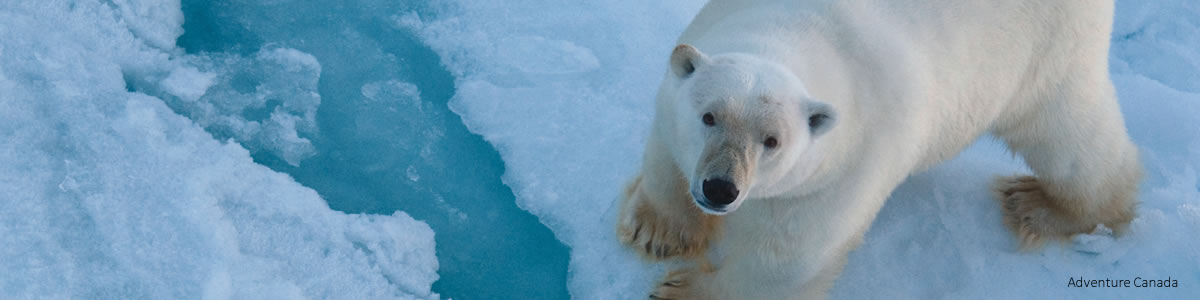
– Encounter the wildlife of Tallurutiup Imanga, an exceptionally rich marine ecosystem supporting whales, walrus, seals, polar bears, and seabirds.
– Step into the Franklin mystery at Beechey Island, where graves and expedition remains connect its windswept shoreline to one of exploration’s most enduring stories.
Itinerary:
Day 1: Kangerlussuaq, Greenland – Cross the Arctic Circle
Kangerlussuaq lies within a broad glacial valley between the Greenland Ice Sheet and the sea. Its dry climate and unusually stable weather led to the establishment of an American air base here during the Second World War and continue to make it one of Greenland’s most important aviation gateways. The surrounding region has a much longer history as a place of Inuit travel and hunting.
After arriving by charter flight from Toronto, board the expedition vessel and begin the long passage through Kangerlussuaq Fjord. Mountains, glacial valleys, and pale meltwater mark the transition from Greenland’s interior to its western coast. Crossing the Arctic Circle, the route opens towards the long light and expansive waters of late Arctic summer.
Day 2 & 3: Sisimiut Coast – A Coast of Fjords and Human History
Greenland’s west coast unfolds as a complex meeting of islands, mountains, sheltered waterways, and deep fjords. Late summer brings colour to the tundra, with Arctic cotton, crowberry, dwarf birch, and willow spreading across slopes beneath dark rock. Seabirds are active along the coast, while whales may be encountered in the waters offshore.
Human history here reaches back more than 4,500 years. Archaeological traces left by successive cultures, including Saqqaq, Dorset, and Thule peoples, speak to generations of movement and adaptation along this coast. Zodiac cruises, hikes, and time ashore offer different ways to encounter a landscape where the sea has long connected hunting grounds, settlements, and travel routes.
Day 4: Ilulissat – Where Icebergs Are Born
Ilulissat means “icebergs,” a fitting name for a city beside one of the world’s great moving ice systems. At the head of the UNESCO-listed Ilulissat Icefjord, Sermeq Kujalleq ranks among the fastest and most active glaciers on Earth. Its immense icebergs travel slowly through the fjord before entering Disko Bay, continually transforming the seascape.
The icefjord has shaped human life here for more than four thousand years. That relationship continues in contemporary Ilulissat, a lively Greenlandic city where fishing boats crowd the harbour and the streets bustle with residents and travellers. Restaurants showcase Greenlandic ingredients, while cafés, shops, and the striking Ilulissat Icefjord Centre reflect the city’s growing cultural and creative energy.
Here, deep human history, vibrant city life, and constant environmental change come together at the edge of the ice.
Day 5 & 6: Northwest Greenland – Through a Coast of Islands and Ice
Northwest Greenland is a far-reaching world of islands, narrow channels, sheltered bays, and deep fjords enclosed by steep mountains. Glaciers descend from the ice sheet, while the West Greenland Current carries immense icebergs north along the coast. Many began their journeys in Disko Bay, joining bergs released by glaciers farther north to form a great moving flotilla of towers, arches, and fractured blue faces.
Small communities occupy rocky islands and natural harbours throughout this intricate seascape. Fishing and hunting remain central to life, while boats connect settlements separated by water and rugged terrain. Explore the coast by ship, Zodiac, and on foot, following shorelines alive with seabirds and walking across tundra brightened by Arctic cotton, crowberry, and late-summer wildflowers. Long hours of daylight reveal a landscape of immense scale, where every channel offers a different arrangement of rock, water, and drifting ice.
Day 7: At Sea – Across the Great Northern Bay
Baffin Bay extends between Greenland and the Canadian Arctic, carrying currents, wildlife, and immense drifting ice between its coasts. Icebergs moving north along Greenland may turn west through these waters before joining the southbound current along Baffin Island. Whales, seals, northern fulmars, kittiwakes, murres, and dovekies also travel and feed across this vast marine ecosystem.
A day aboard offers time to watch the bay unfold from the decks and observation spaces. Presentations, workshops, and conversations with Inuit cultural educators, naturalists, historians, and other expedition team members explore the wildlife, geography, cultures, and exploration history of the region. Ahead lies Smith Sound and the entrance to the waterways of the High Arctic.
Day 8: Smith Sound – Between Greenland and Ellesmere
Smith Sound forms a dramatic channel between Greenland and Ellesmere Island. Mountains and glaciers rise on either side, while drifting ice moves through waters connecting Baffin Bay with the waterways farther north. The scale of the passage is heightened by the clear, extended light of late summer.
Inuit have long travelled and hunted throughout this region. During the nineteenth century, Smith Sound also became a route for expeditions searching for Franklin and attempting to reach the North Pole. These histories meet within a landscape still governed by ice, currents, weather, and distance.
Day 9: Ausuittuq (Grise Fiord), NU, Canada – Life in the Place That Never Thaws
Set between the mountains and sea of southern Ellesmere Island, Ausuittuq means “the place that never thaws.” Canada’s northernmost civilian community occupies a landscape of glaciers, vast tundra, and waters that remain covered by sea ice through much of the year.
The community was established in 1953 through the Canadian government’s relocation of Inuit families from Inukjuak and Mittimatalik. That difficult history remains an important part of Ausuittuq’s story, alongside more than seventy years of community life shaped by family, ingenuity, and cultural continuity. Hunting, travel on the nuna (land), artistic expression, and the rhythms of the seasons remain closely woven into life here. Time with local hosts offers a view of contemporary High Arctic community life within the immense landscape of Ellesmere Island.
Day 10 & 11: Tallurutiup Imanga (Lancaster Sound) and Devon Island – Where Life Gathers in the High Arctic
Tallurutiup Imanga is the ecological engine of the eastern Canadian Arctic. Nutrient-rich waters and recurring areas of open water support narwhal, beluga and bowhead whales, walrus, seals, polar bears, and some of the Canadian Arctic’s largest seabird colonies. In late summer, marine mammals continue to move through the channels while birds gather along cliffs and shorelines before migration.
This National Marine Conservation Area is also an Inuit homeland used for travel, harvesting, and cultural practice for millennia. Inuit stewardship and Inuit Qaujimajatuqangit, or Inuit knowledge, play an essential role in its protection. Inuit expedition team members and naturalists bring the relationships among currents, ice, wildlife, and human life into focus.
To the north, Devon Island rises in broad plateaus, glacial valleys, gravel plains, and open tundra. It is the world’s largest uninhabited island, although archaeological sites attest to centuries of Inuit and earlier human presence. Walks and Zodiac explorations reveal delicate late-summer vegetation, immense geological scale, and coastlines approached most naturally from the sea.
Day 12: Beechey Island – In the Wake of Franklin
Beechey Island holds one of the most tangible chapters in the history of Northwest Passage exploration. Franklin’s expedition spent the winter of 1845–46 here before sailing onward and disappearing. Three graves, remains of the camp, and stone structures left by later search expeditions still mark its stark shoreline.
Beechey became a gathering point for those who came north in search of Franklin, leaving supplies, messages, and traces of their own journeys. A fourth grave belongs to Thomas Morgan of HMS Investigator, who died during one of these searches. In the decades following Franklin’s disappearance, dozens of expeditions entered the Arctic, charting extensive areas and extending European scientific and imperial attention across Inuit Nunangat.
Inuit testimony proved essential to tracing the expedition’s final movements and, generations later, locating its lost ships. Beechey Island connects Franklin’s failed voyage with its wider legacy, including expanded geographical knowledge, growing colonial ambitions, and an increasingly sustained southern presence in Inuit homelands.
Day 13: Ikirahaq (Bellot Strait) – Where Two Arctic Waters Meet
Ikirahaq is a narrow, twenty-five-kilometre passage separating Somerset Island from the Boothia Peninsula. At its narrowest, little more than a kilometre divides the shores. Strong tidal currents move through the channel as the waters of the eastern and western Arctic meet.
Granite walls rise close to the route, while seals, whales, seabirds, and occasionally polar bears may be seen along the shore or among the moving ice. On the southern side lies Murchison Promontory, the northernmost point of mainland North America.
Ikirahaq has long been travelled by Inuit. It later became important to expeditions searching for Franklin and attempting to navigate the Northwest Passage. The English name honours French naval officer Joseph René Bellot, who joined two Franklin searches before his death in the Arctic in 1853. Passage through this confined and powerful waterway remains shaped by current, ice, weather, and careful navigation.
Day 14–16: Kitikmeot Region – Sail Through the Heart of the Northwest Passage
The Northwest Passage opens westward into the low tundra, scattered islands, and distant horizons of the Kitikmeot Region. Wide sounds narrow into channels that weave among gravel coastlines, wetlands, and archaeological sites. Muskoxen and caribou move across the land, seals and whales travel the surrounding waters, and migratory birds gather before beginning their journeys south.
The western Kitikmeot is the homeland of Inuinnait, a distinct regional group of Inuit whose language, Inuinnaqtun, carries the place names, stories, and knowledge of this region. Generations of harvesting caribou, muskoxen, seals, and fish have shaped distinctive clothing, tools, food traditions, and patterns of travel. Today, Inuinnait communities are strengthening the transmission of their language and culture while sustaining close relationships with the land and sea.
These waters also form part of the route navigated by Roald Amundsen during the first complete transit of the Northwest Passage. His success drew heavily upon skills learned from Netsilik Inuit while overwintering near present-day Uqsuqtuuq (Gjoa Haven) in the eastern Kitikmeot. Over three days, landings, tundra walks, Zodiac explorations, and time along the coast bring the wildlife, cultural depth, and open geography of the western Arctic into view.
Day 17: Kugluktuk (Coppermine), NU, Canada – Where River and Passage Meet
Kugluktuk stands where the Coppermine River enters Coronation Gulf. Its Inuinnaqtun name means “place of moving waters,” reflecting the currents and rapids that have long defined this meeting of river, tundra, and sea.
The Coppermine has supported travel, fishing, and life on the land for generations. Today, Kugluktuk is a close-knit community known for its artists, strong connections to the surrounding country, and position at the western edge of Nunavut.
Here, the east-to-west passage reaches its conclusion at the mouth of one of the Arctic’s great rivers. After disembarkation, a charter flight carries guests to Yellowknife, completing the journey from Greenland’s glacier-carved coast across the waterways of Inuit Nunangat.
The Ocean Victory, launched in 2021, is one of the most modern small expedition vessels at sea. Purpose-built for discovery, it combines comfort, capability, and a deep commitment to sustainability – an ideal platform for Adventure Canada’s small-ship journeys to some of the world’s most remarkable places. Its innovative X-BOW® hull delivers smoother, quieter crossings and greater stability, while its ice-strengthened design ensures safe passage into areas few ships can reach.
On board, travellers are welcomed into bright cabins, panoramic decks, and inviting spaces designed to spark conversation, laughter, and learning. Shared meals, engaging presentations, and quiet moments of reflection as icebergs drift past create a sense of community and curiosity. The Ocean Victory offers a rare combination of comfort, connection, and environmental care.
Ship Profile & Stats
- Length: 104.40 m
- Tonnage: 8,181 gt
- Maiden Voyage: 2021
- Passenger Capacity (dbl): 186
- Ship Registration: Madeira, Portugal

Founded in 1987, Adventure Canada was created to bring travellers to Canada’s “blank spaces”, those areas whose remoteness alone made them special. Over the last fifteen years, along with our guests, we have discovered that there is so much that is extraordinary about the places we travel, from the landscape, wildlife and culture to the history, art and archeology that is unique to every destination. It is our belief that there is so much to see “beyond the binoculars” that drives us to delve deeper into our favourite places with every expedition and continually seek out new destinations.
We travel by small expedition ship, the best suited mode of transportation for remote exploration. The number of passengers on our voyages run between 45 and 100, depending on the ship we choose. We believe that these small vessels are superior, as they not only allow us to gain access to places not accessible by larger vessels, but our fleet of Zodiac landing craft permit us to visit some of the most remote places imaginable – the key to expeditionary travel.
Select the Deck to view detail.


Select the Cabin to view detail.


– Porthole window
– Double bed
– Bathroom with a shower
– Selection of bath products (body wash, lotion, shampoo) and hair dryer
– Bathrobes and slippers
– Desk and a chair
– Refrigerator
– Private air conditioning
– Television
– Wi-Fi access (basic service included)
– Several 230V outlets and USB ports
– Safety box
– Approximately 151 square feet (14 sqm)
– Cabin layout and size may vary


– Private balcony
– Two-bedroom suite
– Double bed or twin beds
– Spacious bathroom with shower
– Selection of bath products (body wash, lotion, shampoo) and hair dryer
– Bathrobes and slippers
– Sitting area with sofa bed
– Desk and a chair
– Refrigerator
– Private air conditioning
– Television
– Wi-Fi access (basic service included)
– Several 230V outlets and USB ports
– Safety box
– Approximately 452 square feet (42 sqm)


– Private balcony
– Double bed or twin beds
– Spacious bathroom with shower
– Selection of bath products (body wash, lotion, shampoo) and hair dryer
– Bathrobes and slippers
– Sitting area with sofa bed
– Desk and a chair
– Refrigerator
– Private air conditioning
– Television
– Wi-Fi access (basic service included)
– Several 230V outlets and USB ports
– Safety box
– Approximately 388 square feet (36 sqm)
– Cabin layout and size may vary


– Large private balcony
– Double bed or twin beds
– Bathroom with a shower
– Selection of bath products (body wash, lotion, shampoo) and hair dryer
– Bathrobes and slippers
– Desk and a chair
– Refrigerator
– Private air conditioning
– Television
– Wi-Fi access (basic service included)
– Several 230V outlets and USB ports
– Safety box
– Approximately 280-344 square feet (26-32 sqm)
– Cabin layout and size may vary


– Balcony
– Double bed or two single beds
– Bathroom with a shower
– Selection of bath products (body wash, lotion, shampoo) and hair dryer
– Bathrobes and slippers
– Desk and a chair
– Refrigerator
– Private air conditioning
– Television
– Wi-Fi access (basic service included)
– Several 230V outlets and USB ports
– Safety box
– Approximately 269-323 square feet (25-30 sqm)
– Cabin layout and size may vary


– Balcony
– Double bed or twin beds
– Bathroom with a shower
– Selection of bath products (body wash, lotion, shampoo) and hair dryer
– Bathrobes and slippers
– Seating area featuring a sofa, table, and chair
– Optional connecting staterooms available upon request
– Refrigerator
– Private air conditioning
– Television
– Wi-Fi access (basic service included)
– Several 230V outlets and USB ports
– Safety box
– Approximately 237-269 square feet (22-25 sqm)
– Cabin layout and size may vary


– Balcony
– Double bed or twin beds
– Bathroom with a shower
– Selection of bath products (body wash, lotion, shampoo) and hair dryer
– Bathrobes and slippers
– Desk with a chair
– Refrigerator
– Private air conditioning
– Television
– Wi-Fi access (basic service included)
– Several 230V outlets and USB ports
– Safety box
– Approximately 194-237 square feet (18-22 sqm)
– Cabin layout and size may vary


– Floor-to-ceiling windows
– French-style balcony
– One queen size bed
– Bathroom with a shower
– Selection of bath products (body wash, lotion, shampoo) and hair dryer
– Bathrobes and slippers
– Desk with a chair
– Refrigerator
– Private air conditioning
– Television
– Wi-Fi access (basic service included)
– Several 230V outlets and USB ports
– Safety box
– Approximately 151 square feet (14 sqm)
– Cabin layout and size may vary


– Porthole window
– Double bed or two single beds
– Bathroom with a shower
– Selection of bath products (body wash, lotion, shampoo) and hair dryer
– Bathrobes and slippers
– Desk and a chair
– Refrigerator
– Private air conditioning
– Television
– Wi-Fi access (basic service included)
– Several 230V outlets and USB ports
– Safety box
– Approximately 140-237 square feet (13-22 sqm)
– Cabin layout and size may vary


– Porthole window
– Two twin beds or double bed, plus sofa bed
– Bathroom with a shower
– Selection of bath products (body wash, lotion, shampoo) and hair dryer
– Bathrobes and slippers
– Desk and a chair
– Refrigerator
– Private air conditioning
– Television
– Wi-Fi access (basic service included)
– Several 230V outlets and USB ports
– Safety box
– Close to mud room and loading platforms
– Approximately 194-237 square feet (18-22 sqm)
– Cabin layout and size may vary
* Unless otherwise noted all pricing is on a per person twin share basis. All prices based on cash payment - credit card fees may apply. Cruise deposit, amendment and cancellation conditions apply. Special conditions may apply - please ask for full details at time of enquiry. All passports, vaccinations and visas are the responsibility of the travelling guest to secure prior to departure from Australia. Any pricing not in Australian Dollars will be converted on the day of payment into the relevant currency based on our daily rate of exchange. Please note that many of the prices shown on this website are not shown in real time. Whilst we endeavour to keep our pricing as up-to-date as possible, the advertised prices shown here may differ slightly from the live prices in our booking system. All pricing and offers are subject to availability at time of booking. Whilst all information is correct at the time of publication, offers are subject to change. We reserve the right to correct errors without penalty. Please submit any data errors/omissions you may notice on this site.
Unless otherwise expressly noted, all materials, including images, illustrations, designs, icons, and photographs appearing anywhere on this website are protected by worldwide copyright laws and treaty provisions. The copyright on such materials is held by the original creator of the materials. None of the materials may be copied, reproduced, displayed, modified, published, uploaded, posted, transmitted or distributed in whole or in part in any form or by any means other than as provided by Cruise Factory and Cruise Traveller to its clients, or with the prior written permission of Cruise Factory and Cruise Traveller. All rights not expressly granted in these Terms are reserved. Any unauthorised use of the materials appearing on this website may violate copyright, trademark and other applicable laws and could result in criminal or civil penalties.